Cambridge, MA · refrigeration only
Cold side
of the
Cambridge kitchen
Sub-Zero built-ins, freezer columns, ice makers and wine cabinets — diagnosed where they stand, in kitchens that were framed around them.
The Work
Four appliances,
one system
Everything on this list runs on the same handful of parts — a compressor, an evaporator, a fan, a defrost circuit and a control that decides when each of them gets a turn. Which one failed is the whole question.
-
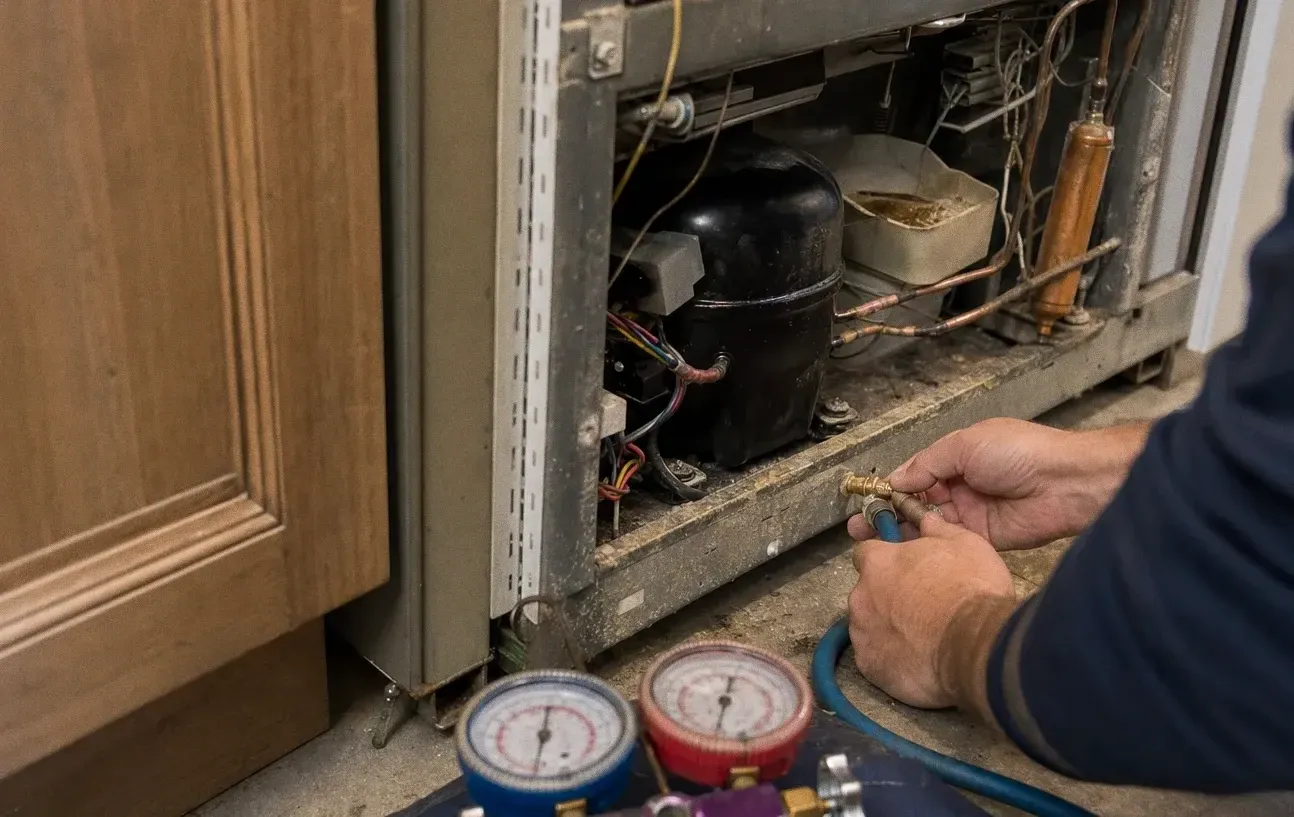
 Sub-Zero Refrigerator Repair Built-in and integrated Sub-Zero refrigerators in Cambridge kitchens tend to fail slowly - a compartment that drifts warm, a door that stops sealing, a condenser choked with dust behind a cabinet panel. We diagnose on site and explain what the unit is actually doing before any part is ordered. Fresh food section running warm while the freezer stays coldCompressor running non-stop and never cycling off Read the page
 -
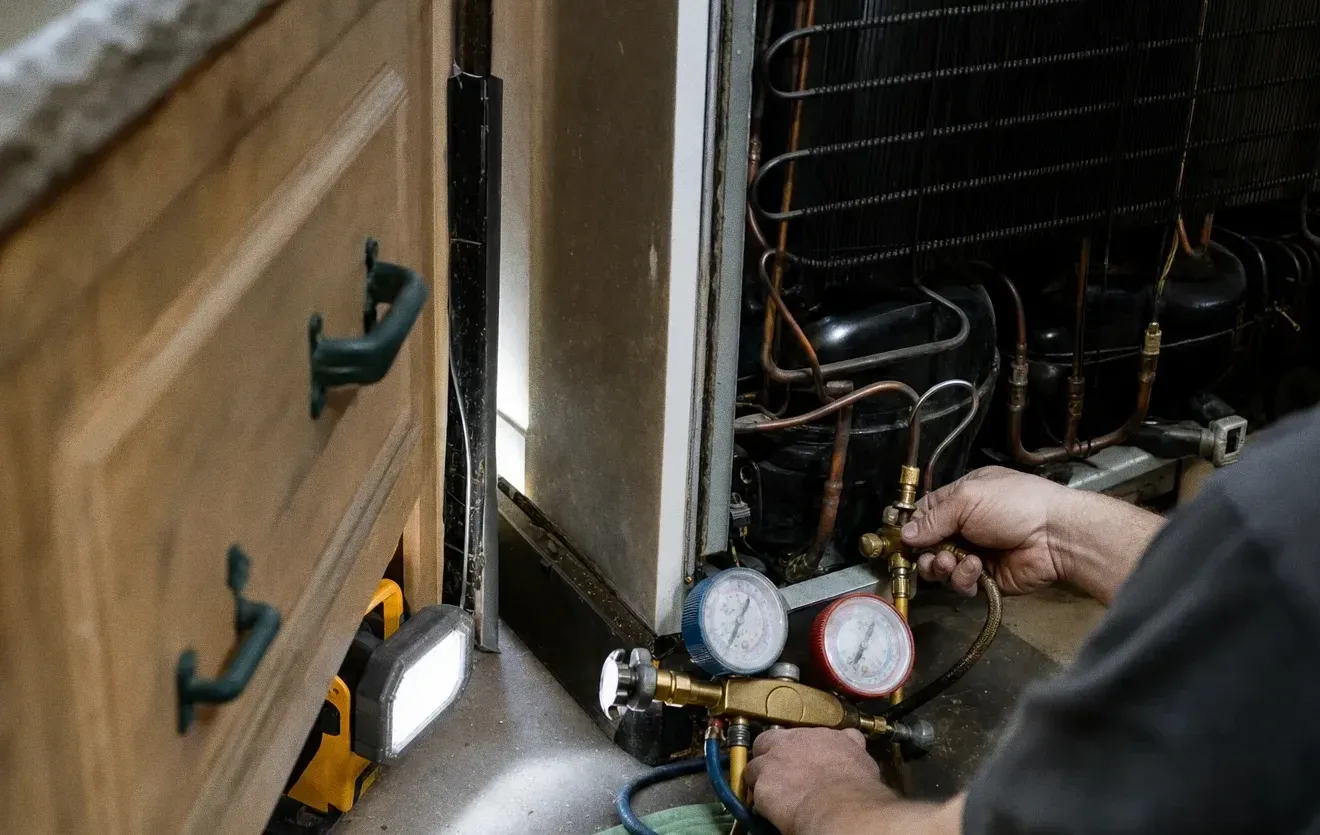
 Sub-Zero Freezer Repair Frost build-up, a freezer that will not hold temperature, or a drawer unit that has quietly given up overnight. Dual-compressor Sub-Zero freezers fail differently from the fridge side, so we treat them as a separate system rather than one appliance. Heavy frost on the back wall or around the fanIce cream soft while the display still reads zero Read the page
 -
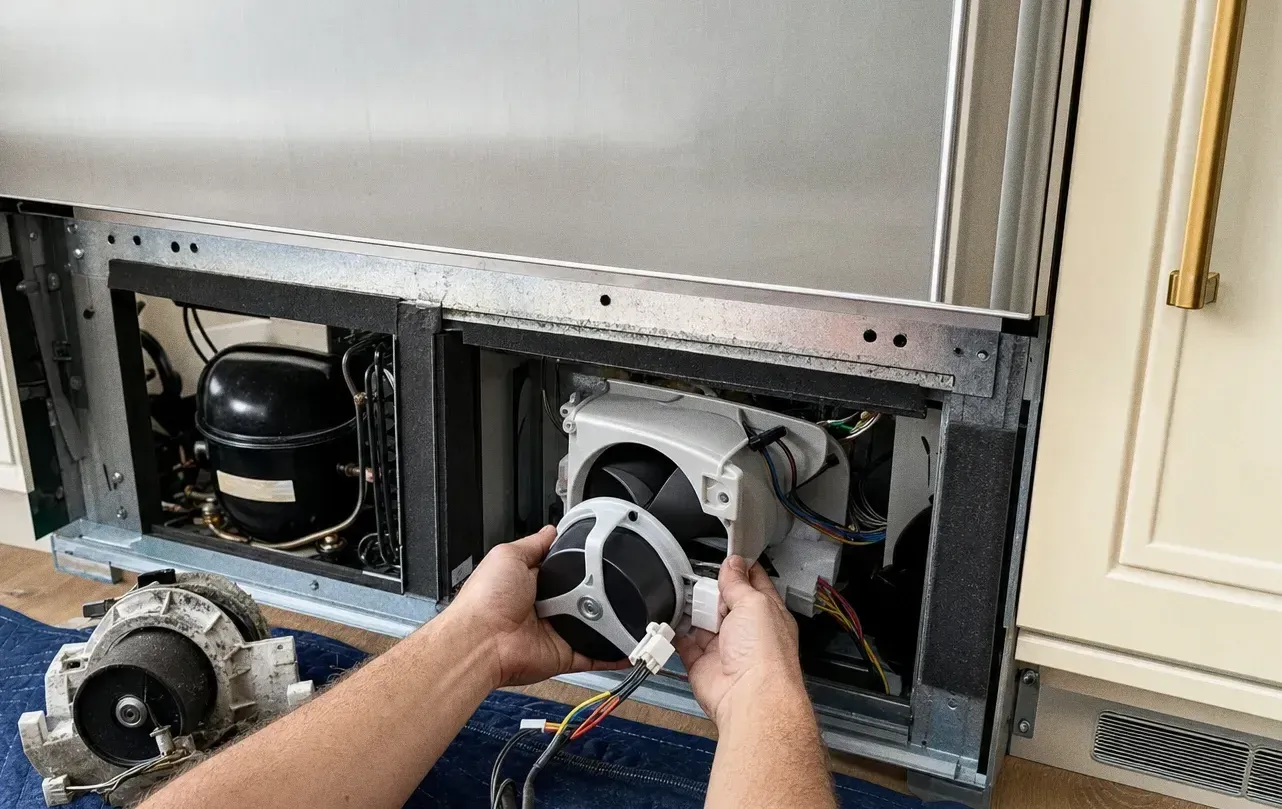
 Sub-Zero Ice Maker Repair Sub-Zero ice makers stop for a handful of reliable reasons - a blocked fill line, a failed water valve, a compartment that has drifted warm, or a mold heater that no longer releases the cubes. We test the water path and the harvest cycle instead of swapping the whole module first. No ice at all after a full dayHollow or undersized cubes Read the page
 -
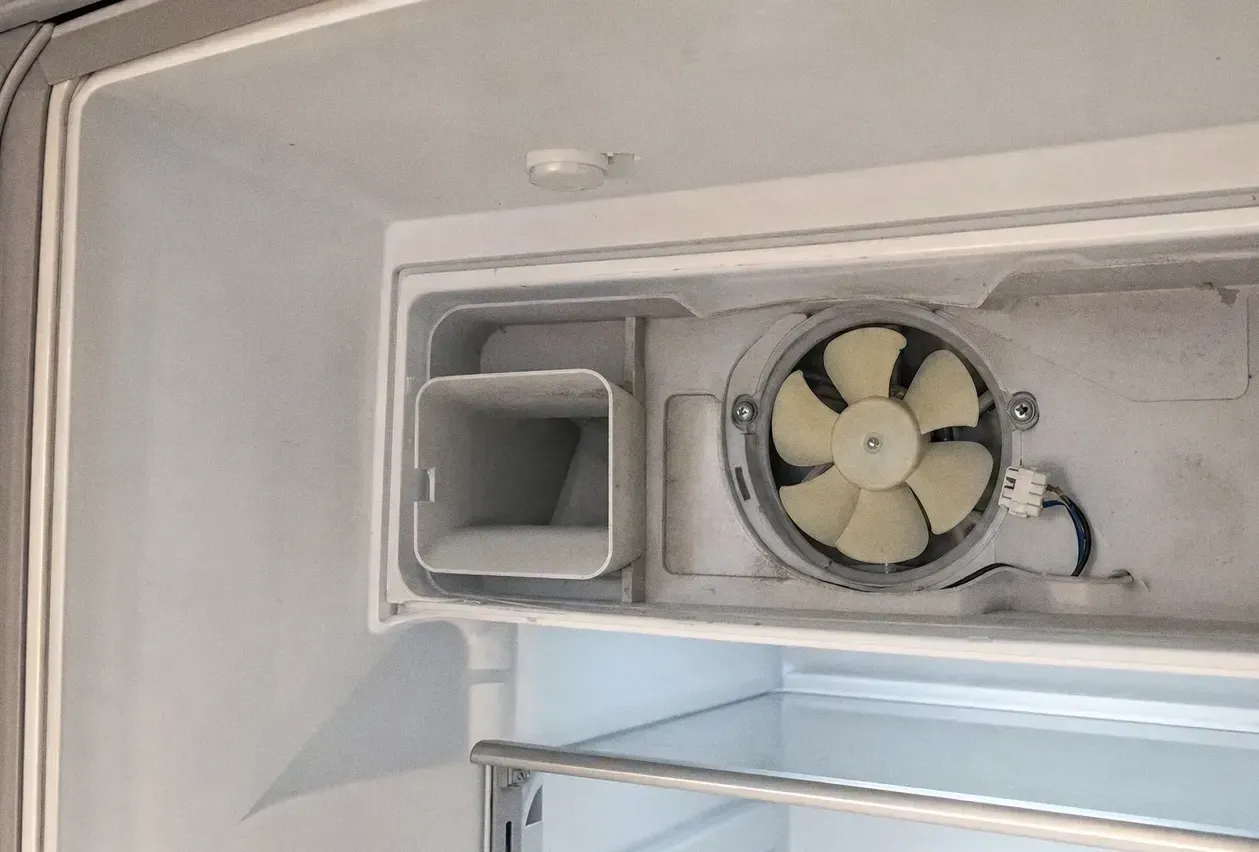
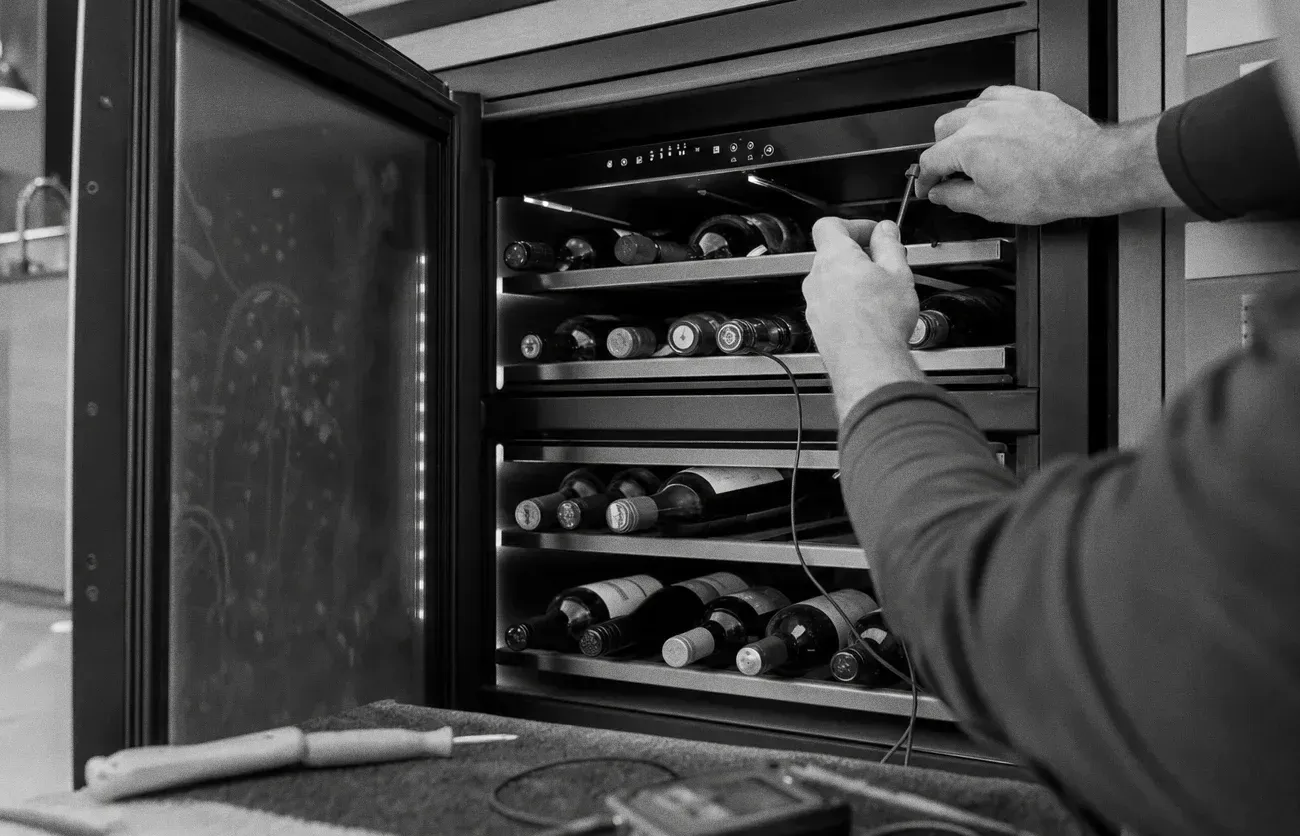 Sub-Zero Wine Cooler Repair A Sub-Zero wine unit that swings a few degrees is a problem in a way a beverage fridge is not. We check zone control, door seals and the condenser airflow that undercounter installations in tight Cambridge cabinetry so often lose. Zone temperature drifting several degrees from the setpointCondensation on the inside of the glass door Read the page
How a call runs
Three stages,
no surprises in between
-
Tell us what it is doing
The model and serial off the plate — inside the fresh-food compartment on most columns, behind the base grille on under-counter units — plus what changed and when. Half the diagnosis happens on that call.
-
A visit that measures things
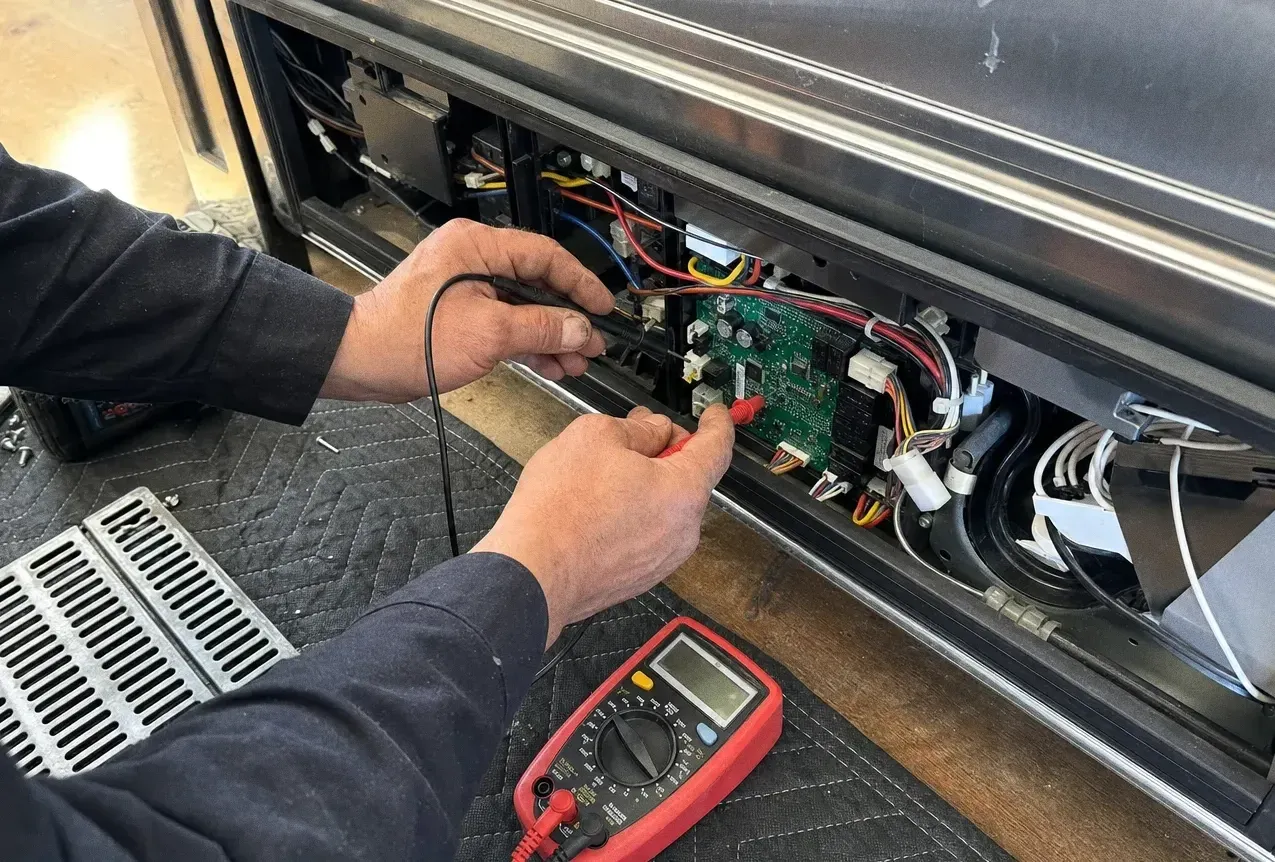
Compartment temperatures against the setpoint, evaporator and condenser behaviour, defrost termination, door seal pull. We work out what the unit is actually doing before deciding what to change.
-
The number before the work
Parts and labour as one figure, with the alternative if there is one. If a unit is not worth the repair we will say so and you will only have paid the service call.
Questions
Asked on the phone, most weeks
The fresh food side is warm but the freezer is fine. Is that one fault?
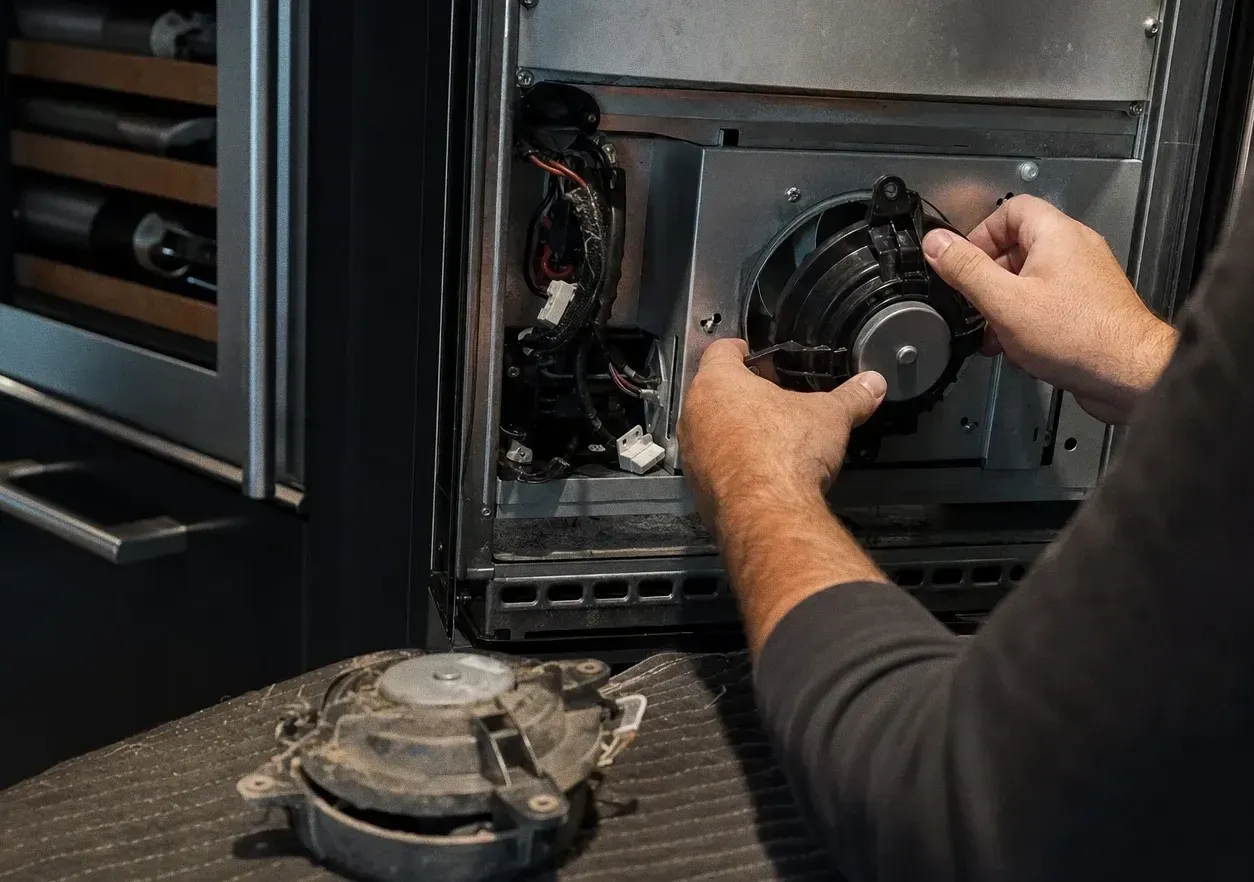
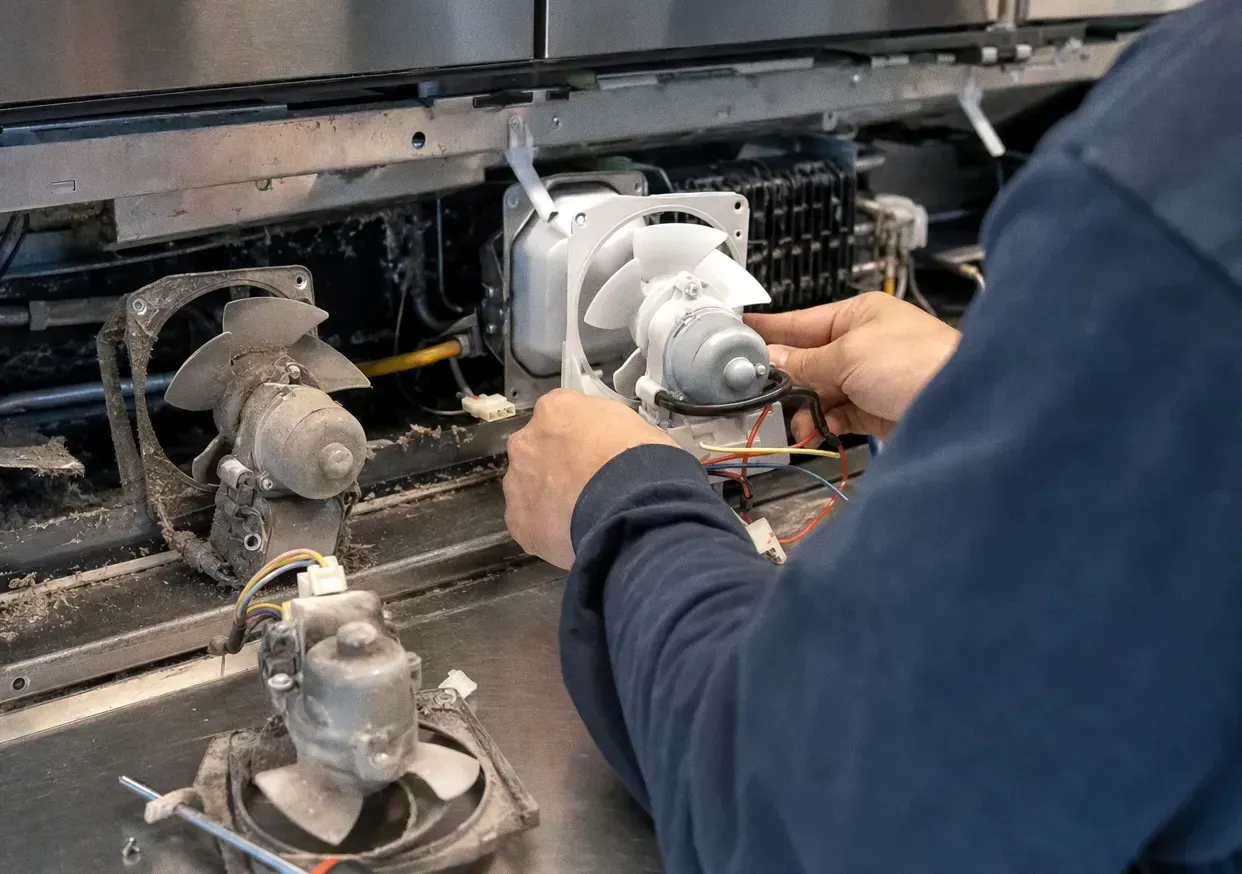
On a dual-compressor unit they are two separate systems, so it usually is a single fault on the fresh-food side — often the evaporator fan or a defrost problem icing that coil over. On a single-compressor model the same symptom points at the damper or the air path between the two compartments instead, which is why the model number matters before anyone guesses.
How much room do you need around a built-in column?
Enough to get the base grille off and, on some jobs, enough to draw the unit forward on its rollers. In a Cambridge kitchen that often means clearing a run of counter and lifting a floor threshold. Tell us what the surround looks like when you call and we can plan the access rather than discover it.
The ice maker stopped and everything else seems normal.
Start with the water: a saddle valve that has silted up, a fill tube frozen at the inlet, or a shut-off nobody has touched since the kitchen was redone. If water is arriving, the next candidates are the fill valve, the mould heater that releases the cubes, and a freezer compartment sitting a few degrees too warm to complete a harvest.
My wine cabinet swings three or four degrees. Does that matter?
It matters more than the same swing in a beverage fridge. Drift usually comes from condenser airflow — an under-counter unit in tight cabinetry with a blocked or recirculating grille — or from a door seal that no longer pulls flat. Both are checkable on the visit without ordering anything.
Do you work on units the previous owner left behind?
Yes. A lot of the built-ins in this city outlast two or three owners, and the paperwork rarely survives the move. The plate inside the compartment tells us the model and the build, which is all we need to bring the right parts.
What does the service call cover?
The visit and the full diagnosis, at a flat $95. It is credited against the repair if you approve one, so on an approved job it is not an extra charge. Nothing else is billed without you agreeing to it first.
Where We Go
Four corners of the city,
four different install problems
- Harvard Square The streets off Brattle and Garden hold some of the oldest wood-frame and brick houses in the city, many carved into condominiums and later recombined. Kitchens here are usually built into former pantries and back halls, so a full-height built-in often sits in a space that was never framed for one. Harvard Square page
- Porter Square North Cambridge triple-deckers and Avon Hill Victorians dominate, with kitchens on upper floors reached by narrow back stairs. Access is the recurring constraint - a 48-inch built-in that went in during a gut renovation rarely comes back out the front door. Porter Square page
- East Cambridge Brick worker housing on Sixth and Otis sits alongside the newer condominium buildings by Lechmere and CambridgeSide. The new units run panel-ready refrigeration in tight galley kitchens, while the older houses keep theirs in converted back rooms. East Cambridge page
- Kendall Square Newer residential towers among the laboratory blocks, almost all of them with panel-ready appliances built into compact galley kitchens. Delivery runs through a loading dock and a booked service lift. Kendall Square page
Straight answers
What you are actually hiring
-
Refrigeration only
Cold side of the kitchen and nothing else — Sub-Zero refrigerators, freezer columns, ice makers and wine cabinets. No ranges, no dishwashers, no laundry.
-
One flat visit fee
$95 covers the trip and the full diagnosis, and it comes off the bill if you go ahead with the repair. You hear the number before anyone is booked in.
-
Built-ins, not freestanding
Panel-ready columns, integrated units and under-counter drawers, most of them fitted into cabinetry that was built around them and cannot be pulled out casually.
-
A reading, then a price
Superheat and subcool, compartment differentials, defrost cycle, condenser airflow. The parts list follows the readings rather than the other way round.
Reviews
What people wrote afterwards
5out of 5from 486 reviews
5 out of 5
Water was running down the inside wall of the freezer instead of into the tray. Split fill tube behind the rear panel. He replaced it, then stayed to watch two full harvest cycles before calling it finished.
Rosalind Q.East Cambridge
5 out of 5
Bottles on the top shelf sat warmer than the readout claimed. He left his own probe in overnight and came back with data rather than a guess. A fan turning slow.
Everett Q.Kendall Square
5 out of 5
Avon Hill Victorian with the kitchen up on the second floor. Ours short cycled every few minutes. He measured the start winding and showed me the relay was at fault rather than the compressor.
Callum R.Porter Square
Book it
Get the cold back
Tell us what it is doing and we will tell you what it usually is.
(781) 790-4760
What it costs
Ranges, not a single number
Flat $95 service call covering the visit and full diagnosis, credited against the repair once you approve it. Repairs are quoted in full before anything is opened, and these are the bands most jobs land in.
| Repair | Usual range |
|---|---|
| Door gasket or seal replacement | $270 – $810 |
| Evaporator or condenser fan motor | $300 – $630 |
| Defrost heater, thermostat or sensor | $300 – $660 |
| Ice maker, water valve or supply line | $290 – $640 |
| Electronic control board | $470 – $860 |
| Compressor or sealed-system repair | $980 – $2,220 |
Repair or replace? A comparable new unit is $7,770 to $19,780
A comparable built-in refrigerator, appliance only — before delivery, installation, custom panels or cabinetry work. Undercounter and wine units sit below this band; a column replacement is usually two purchases rather than one.
What moves a job within its band
Which system failed
A door gasket and a compressor are the two ends of the same appliance. Control, airflow and seal faults sit at one end of the range; sealed-system work sits at the other.
Whether the part is current
Parts for a current platform arrive quickly. A discontinued board or a superseded evaporator can mean a supersession lookup and a longer wait, and that shows up in the quote.
How the unit is installed
A unit that rolls forward is a different job from one trapped behind a stone counter and a fixed panel. Access is quoted honestly rather than discovered halfway through.
One visit or two
If the fault is diagnosed and the part is on the van it finishes that day. If the part has to come in, the return visit is included in the quoted figure rather than added afterwards.